
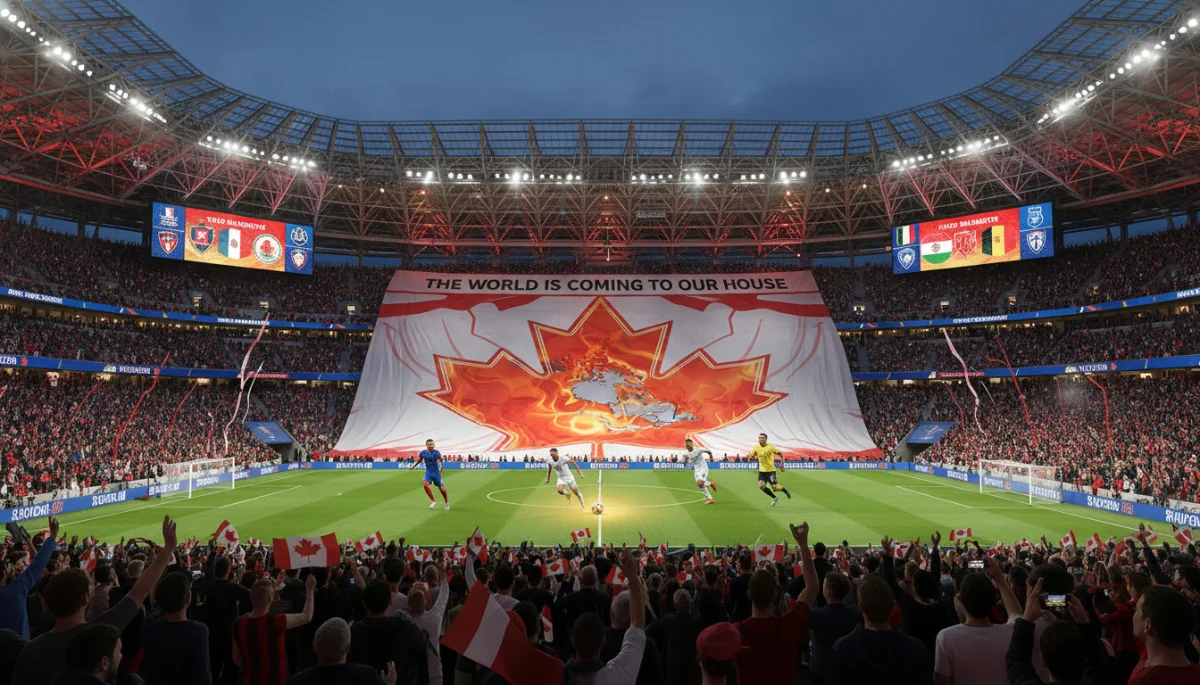
The 2026 FIFA World Cup will bring the sport’s biggest stage to Canada, Mexico, and the United States, and the race for the title already feels wide open. With a larger field and the pressure of a long, demanding tournament, the teams best built for depth, balance, and composure should rise to the top.
For Canadian fans, the excitement is twofold: cheering for the home side while also tracking the global heavyweights that will fill stadiums in Vancouver, Toronto, and beyond. The field is deeper than ever, but a few nations still stand out as the clearest contenders.
The top tier begins with raw talent and proven pedigree
France remains the standard by which everyone else is measured. Their squad has elite options at nearly every position, and their biggest advantage is the kind of match-winner who can decide a tournament in a few seconds. Kylian Mbappé gives France a level of pace and direct danger that forces every opponent to defend differently, while the rest of the roster supplies the structure needed to survive the grind of a World Cup.
Brazil is right there as well, and the case for the Seleção is simple: few teams can match their attacking variety. Vinícius Júnior and Rodrygo give Brazil speed, creativity, and chaos in the final third, while the rest of the team offers a more disciplined base than many past Brazilian sides. That blend makes them dangerous in both open games and tight knockout rounds.
England also belongs in the first conversation. Their core has matured into one of the most complete groups in international soccer, with Jude Bellingham shaping play from midfield and Harry Kane supplying reliability in front of goal. The only question is whether England can handle the emotional weight that always follows them into major tournaments.
A compact view of the leading contenders
| Team | Main Strength | Why They Matter |
|---|---|---|
| France | Depth and explosive star power | Built to control games and punish mistakes |
| Brazil | Attack with balance | Creative enough to overwhelm opponents, organized enough to last |
| England | Midfield control | Strong on paper and capable of sustained pressure |
| Argentina | Tournament experience | Knows how to manage pressure and win difficult matches |
| Spain | Technical quality | Young, skilled, and increasingly dangerous in transition |
Champions, challengers, and teams built for deep runs
Argentina enters with the advantage that comes from knowing how to win when the margins are thin. Lionel Messi may no longer carry the entire load, but his presence still matters, and the supporting cast around him has become more complete. Julián Álvarez and Alexis Mac Allister give Argentina energy, movement, and enough quality to stay dangerous against anyone.
Spain looks refreshed and more direct than in previous eras. The old image of endless passing without enough bite no longer fits this team, especially with Lamine Yamal bringing pace and unpredictability from wide areas. If Spain keeps its technical control while staying sharp in transition, it has the profile of a true threat.
Germany is another team that belongs in the mix. After a stretch of disappointing tournaments, the Germans have rebuilt around a better balance of youth and experience. Their best versions are always organized, efficient, and hard to unsettle, which makes them especially suited to a tournament played across large venues and long travel stretches.
Portugal is no longer defined by a single player, and that makes the team more dangerous. Bruno Fernandes, Bernardo Silva, and Rafael Leão give them creativity from multiple angles, while the overall system is strong enough to survive the early rounds without overexposing anyone. In knockout play, that kind of flexibility matters.
The teams that can disrupt the bracket
Italy is not the loudest contender, but it is one of the most credible. The Azzurri have rebuilt around structure, discipline, and a competitive mentality that often travels well in World Cup play. They may not overwhelm opponents with star power, but they can drag better teams into uncomfortable matches and turn those games into coin flips.
The Netherlands is similar in that respect, though with a different style. Virgil van Dijk anchors a defense that is difficult to crack, and the rest of the squad has enough athleticism and tactical flexibility to adapt to almost any opponent. If the Dutch can add steady finishing, they have the kind of profile that can punish a favorite in the knockout stage.
Uruguay may be the most difficult team in the group for anyone to face. Under Marcelo Bielsa, they play with relentless energy, aggressive pressing, and almost no interest in giving opponents a clean rhythm. Darwin Núñez gives them a sharp edge in attack, but the real threat is the collective intensity that can wear teams down over 90 minutes.
Canada’s opportunity on home soil
Canada will not enter as one of the favorites, but home advantage can change the tone of a tournament. Playing in front of supportive crowds in Toronto and Vancouver gives the team a platform that most underdogs never get, and Alphonso Davies provides the kind of pace and quality that can tilt a match in an instant.
If Canada can stay organized, stay brave, and make matches messy for better-ranked opponents, it has a real chance to create noise. The path to a deep run is narrow, but the emotional lift of hosting matters, especially in a competition where momentum can shift quickly.
What to watch as the tournament approaches
The favorites will be shaped by more than name recognition. Squad health, travel, chemistry, and the ability to handle pressure across a long tournament will matter just as much as talent. In a 48-team World Cup, the strongest roster is not always the one that wins; often, it is the one that adapts fastest when the bracket turns hostile.
That is why the usual suspects still lead the conversation. France, Brazil, England, Argentina, Spain, Germany, Portugal, Italy, the Netherlands, and Uruguay all have believable paths to the trophy. Some rely on star power, some on structure, and some on pure tournament instinct, but each has enough quality to make the race feel real.