
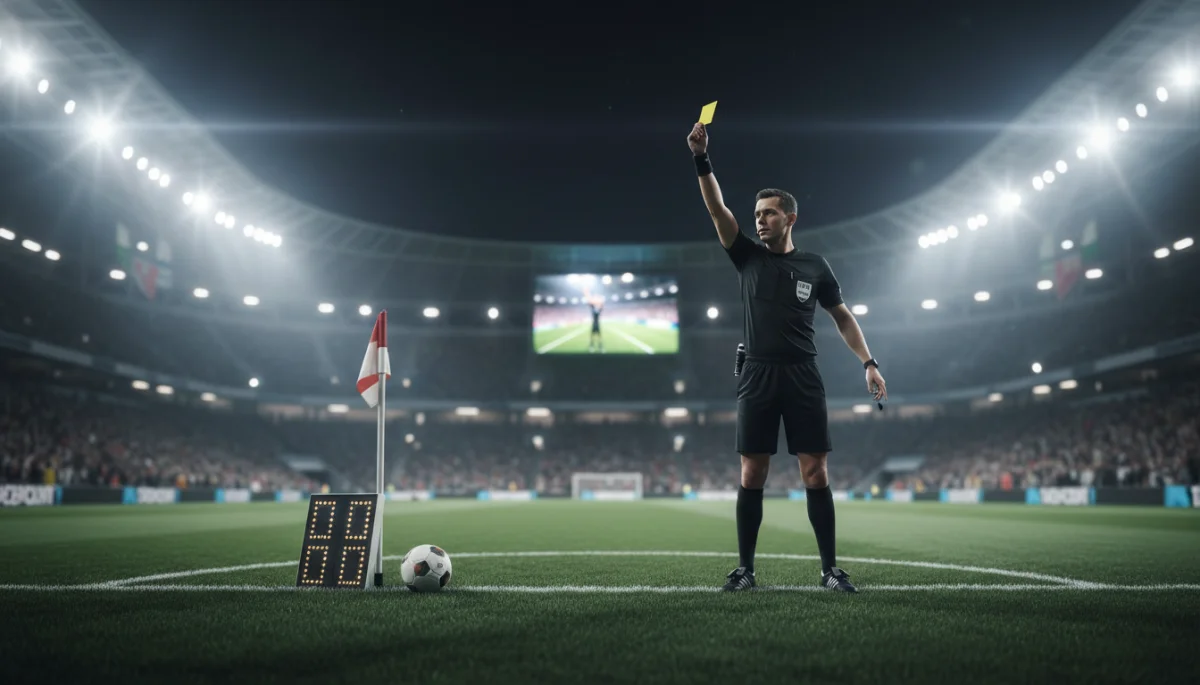
The 2026 FIFA World Cup will arrive with more than a larger field and a bigger global spotlight. It will also feature a set of rule updates that could change the rhythm of matches, the way referees manage pressure, and the decisions players make in key moments.
Many of the adjustments are built around one central goal: make the game cleaner, quicker, and harder to manipulate. That means less time-wasting, tighter control of dissent, stronger protection against abuse, and broader use of video review in select situations.
Why the sport is tightening the law book
Football’s lawmakers have spent years trying to reduce delays and improve consistency. The new World Cup framework reflects that push by targeting the habits that frustrate officials and spectators the most.
Instead of allowing teams to stretch restarts, argue endlessly, or treat minor stoppages as tactical pauses, the updated approach gives referees more direct tools. The result should be a match that moves more cleanly from one phase to the next.
For players and coaches, that means preparation will matter as much as talent. Teams that adapt fastest are likely to feel the benefit first.
Behavior that could now carry harsher consequences
One of the most notable changes involves players who cover their mouths during tense exchanges. In situations where the action appears confrontational, hiding the mouth with a hand, sleeve, or shirt may now be treated as an attempt to conceal abusive language and can lead to a red card.
The intent is not to punish ordinary privacy or casual conversation. The focus is on moments where there is visible conflict, suspicion of misconduct, or an effort to mask what was said.
What officials are trying to prevent
This rule gives referees a clearer response when a confrontation appears to involve language that should not stay hidden. It also discourages players from assuming that covering their mouths will shield them from consequences.
In practical terms, the message is simple: if the exchange is heated enough to raise concern, concealment may be treated as part of the offense rather than a harmless habit.
Walk-offs and protests are being policed more aggressively
Another update is aimed at players or teams that leave the field to protest a call. A protest walk-off can now trigger a red card for the individual involved, and officials who encourage that action may also face punishment.
The rule is designed to stop teams from using abandonment as use when they disagree with a decision. If the situation escalates far enough to force a match to be abandoned, the team responsible could even lose by forfeit.
-
Individual risk: a player who walks off in protest can be sent off.
-
Team risk: officials who urge the protest may also be sanctioned.
-
Match risk: abandonment can lead to a forfeit result.
Restarts will face a much shorter leash
Fans who are tired of slow throw-ins and delayed goal kicks will likely notice one of the most visible changes right away. Referees will use a visible five-second countdown for certain restarts, and once that countdown expires, the penalty follows immediately.
For a throw-in, failing to restart in time hands possession to the other side. For a goal kick, the punishment is even sharper: the opposition can be awarded a corner kick. That is a significant swing, especially late in a tight game.
How the countdown changes match management
Teams often rely on a few extra seconds to settle the field, organize movement, or cool down a fast opponent. Under the new approach, those extra seconds become a liability. A goalkeeper who stalls too long or a defender who takes too much time setting up a throw-in can now create a real scoring chance for the other team.
This should force faster decisions from players and reduce the slow, stop-start patterns that drain momentum from matches.
Substitutions will move faster and look different
Substitution procedure is also being sharpened. Once the board goes up, the player leaving the field must exit within 10 seconds and do so at the nearest boundary point rather than wandering across the pitch.
If the player does not leave quickly enough, the incoming substitute may have to wait before entering. In some cases, that could leave the team briefly short-handed during the restart.
The idea is not to create chaos. It is to remove the kind of delay that has turned substitutions into mini-pauses for coaching instructions or time management.
When referees can show flexibility
There will still be room for common sense. Injuries, safety concerns, and security issues can override the strict timing expectations. But outside those situations, slow walks off the pitch are likely to become much less acceptable.
Medical stoppages are being treated as potential delays
Another significant update involves treatment on the field. When medical staff come on to help an outfield player, that player will usually need to leave the field for one minute after play resumes.
This rule is aimed at preventing minor knocks from becoming tactical interruptions. It also creates an incentive for players to decide carefully whether treatment is truly necessary.
-
Goalkeepers: treated differently because their role is unique.
-
Head injuries and concussions: protected by safety-based exceptions.
-
Penalty takers: may remain eligible if treatment affects an imminent spot kick.
-
Teammate collisions: handled with flexibility when both players need care.
These exceptions matter because the rule is meant to stop gamesmanship, not put player safety at risk.
Video review will reach a few more situations
VAR already changed how major tournaments are officiated, and the 2026 edition is expected to extend that influence a little further. The focus is not on reviewing everything, but on catching clear errors that can be corrected quickly.
One major area is mistaken identity. If the wrong player is booked or sent off, video officials can step in to fix it. Another area is a clearly incorrect second yellow card that leads to a red. That kind of mistake has traditionally been hard to correct, so this adjustment matters.
What else may be reviewed
Some wrongly awarded corner kicks may also be reviewed if the correction can happen without dragging the game into a long delay. In addition, fouls committed before a free kick or corner is taken can now draw attention if the incident clearly affects the restart.
That means holding, blocking, and aggressive jostling during set-piece routines may face more scrutiny than before.
Every match will include hydration breaks
Because the tournament will be played across the United States, Mexico, and Canada, weather conditions could vary widely. To reduce heat-related risk, every match will include hydration breaks in both halves.
Each break is expected to last about three minutes and may come around the middle of the half, often near the 22-minute mark. Referees still keep some flexibility, though, so a treatment stoppage can sometimes double as the hydration break if the timing makes sense.
That approach helps players recover without adding separate downtime that would further stretch the match.
Goalkeeper injuries will no longer double as tactical pauses
In past matches, a goalkeeper injury could create an opening for coaches to speak to their players while the stoppage continued. The new rules are designed to shut that down.
If a goalkeeper is being treated on the field, the other players are not supposed to treat that pause as a chance for an unofficial team talk. The goal is to keep medical stoppages from becoming disguised coaching breaks.
That may sound like a small adjustment, but in a match decided by momentum, even small pauses can matter.
What teams will need to change before kickoff
These updates will reward discipline and punish habits that used to be tolerated. A team that delays a goal kick, drifts through substitutions, or argues too aggressively could now pay for it almost immediately.
Coaches will likely spend a lot of time on the training ground drilling new expectations so players know exactly how fast they must move and how carefully they must behave.
-
Faster restarts: no unnecessary waiting on throw-ins or goal kicks.
-
Cleaner substitutions: shorter exits and less theater.
-
Stricter conduct: more risk for confrontational gestures and protest behavior.
-
Sharper set-piece discipline: fewer opportunities to get away with off-the-ball contact.
What fans are most likely to notice
Supporters should expect referees to be more active and more visible in managing the game. Countdowns at restarts, faster substitution handling, and occasional video intervention in unusual situations will stand out quickly.
The pace of the tournament may feel different at first, especially for fans who are used to long pauses and extended debate. But the overall objective is straightforward: keep the ball moving and reduce the number of moments that feel unnecessary or manipulative.
If the changes work as intended, the World Cup should still deliver drama, but with less time lost to avoidable delay and more focus on actual play.