
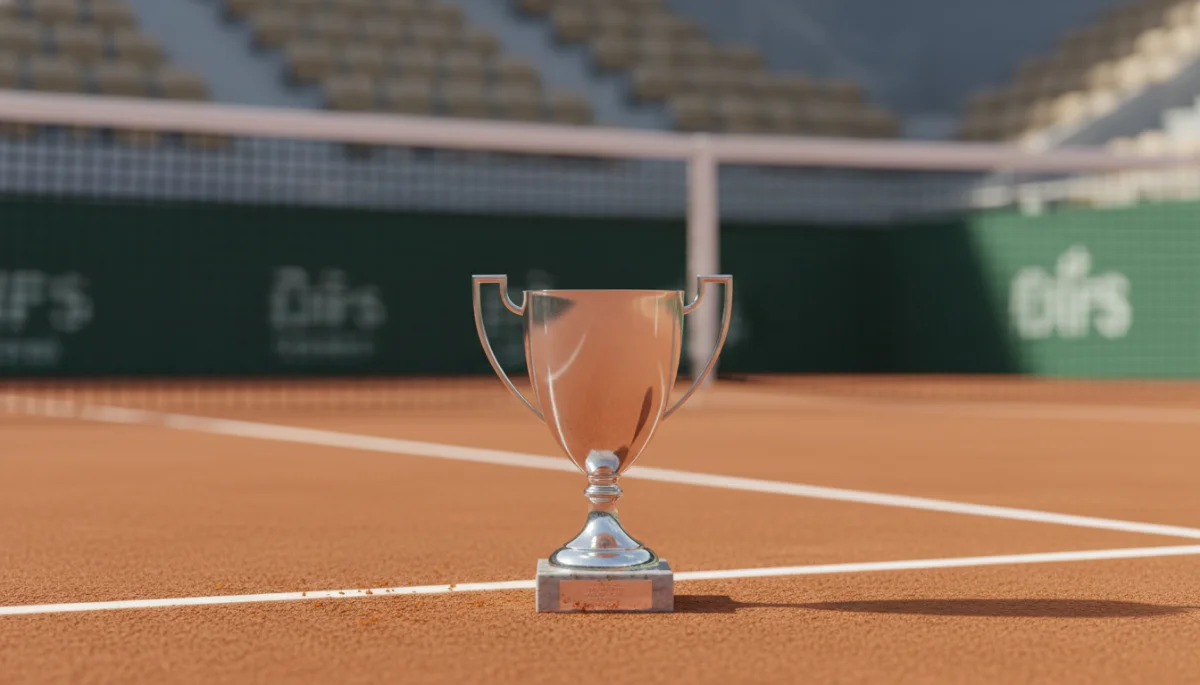
The current world number one has once again demonstrated his absolute authority over the professional tennis circuit, capturing his first ever trophy in the Spanish capital this past Sunday. In a match that was anticipated to be a rigorous test of endurance, the young star instead produced a masterclass of clinical precision. By defeating the world number three in a remarkably lopsided affair, the top-ranked athlete has not only solidified his position at the summit of the rankings but has also achieved a milestone that many experts believed was impossible in the modern era of the sport.
The victory at the prestigious tournament in the heart of Spain was particularly sweet for the champion, who had previously struggled to find his rhythm at this specific venue. After several years of early exits and frustrations, he managed to adapt his high-octane game to the unique conditions of the high-altitude environment. This latest triumph marks a turning point in his season, proving that his defensive capabilities and baseline aggression are now equally effective on every possible surface provided by the tour calendar.
A Masterclass Performance at the Caja Magica
The final match of the tournament was a display of sheer dominance that left spectators and analysts alike in a state of disbelief. Facing off against a seasoned opponent who has previously tasted glory twice at this event, the world number one refused to yield even an inch of ground. From the opening serve, the intensity of his play was evident, forcing his rival into uncomfortable positions and extracting errors with relentless depth. The scoreline of 6-1, 6-2 tells the story of a contest that lacked the usual ebb and flow of a major final, as the eventual winner converted every opportunity presented to him.
Statistically, the performance was nearly perfect. Throughout the duration of the match, the champion did not face a single break point on his own serve, an incredible feat considering the return quality of his opponent. By dictating the pace of every exchange and finding the corners of the court with surgical accuracy, he neutralized the powerful serve and heavy groundstrokes that are the hallmarks of the world number three’s game. It was a clear statement of intent, showing that when he is in this calibre of form, there is very little any other player can do to disrupt his momentum.
The losing finalist was remarkably candid in his post-match assessment, admitting that his own level of play was insufficient to challenge the man across the net. He noted that the precision and speed of the world number one’s shots left him with zero rhythm, making it feel as though he was constantly playing on his back foot. For the spectators at the iconic venue, it was a privileged look at a player operating at the absolute peak of his powers, seemingly immune to the pressure of the occasion or the quality of the opposition.
Rewriting the History Books with Five Successive Elite Trophies
This latest victory is far more than just another piece of silverware for an already crowded trophy cabinet; it represents the culmination of a historic streak that has never been seen before in men’s professional tennis. By securing this title, the athlete has become the first man to win five consecutive tournaments at the Masters 1000 level. This extraordinary run began in late 2025 in the French capital and has continued unabated through the early months of 2026, encompassing a variety of conditions and geographical locations.
The sequence of victories highlights an incredible versatility. Starting with an indoor hard-court triumph, the streak moved through the desert heat of California, the humid conditions of Florida, the traditional red clay of the Mediterranean coast, and finally the thin air of the Spanish plateau. To maintain such a high level of physical and mental performance over these distinct environments requires a level of discipline and preparation that is almost superhuman. The achievement surpasses the greatest runs of previous legends, setting a new benchmark for excellence that will likely stand for decades.
When asked about the significance of this record, the champion remained characteristically humble, crediting the tireless labour of his coaching staff and the support of his family. He emphasized that these results are the product of years of dedication and a constant desire to improve even the smallest aspects of his game. While the history books will now feature his name prominently at the top of this particular list, his focus remains firmly on the daily process of training and recovery rather than the accolades themselves.
Confronting the Reality of an Ever-Widening Talent Gap
As the tour progresses through the 2026 season, a consensus is beginning to form among the elite players: the gap between the world number one and the rest of the field is growing. The world number three, who has spent years at the top of the game and has reached the final stages of numerous major events, was blunt about the current hierarchy. He suggested that the level of play currently being exhibited by the top seed is in a different category entirely, making every match feel like an uphill battle from the first point.
This perceived distance between the leader and the pack is not just a matter of physical skill; it is a psychological hurdle that opponents must now overcome. When a player enters the court knowing that their rival has won 23 consecutive matches and has swept the last five major non-Grand Slam events, it creates a sense of inevitability. The defensive resilience shown by the world number one means that even when opponents play at their highest level, they often find their best shots returned with interest, leading to a sense of exhaustion and eventual surrender.
also, the variety in his game has made it difficult for coaches to develop effective game plans. In previous seasons, there were perceived weaknesses in his net play or his stamina in longer rallies, but those vulnerabilities have been methodically addressed. He is now as comfortable sliding into a defensive backhand on clay as he is stepping into a flat forehand on a quick hard court. This all-court competence has left the rest of the top ten searching for answers, with many wondering if anyone can currently disrupt his march toward total dominance.
The Final Hurdle in the Quest for a Career Golden Masters
With the Spanish chapter of the season now concluded, all eyes turn toward the Italian capital for the next major event. This upcoming tournament holds immense personal and professional significance for the world number one, as it is the only remaining elite trophy missing from his collection. Should he succeed in front of his home crowd, he would become only the second man in history to complete the Career Golden Masters—an achievement that requires winning every single one of the nine high-level events currently on the tour schedule.
The pressure of playing in one’s home country is notoriously difficult to manage, yet the current form of the athlete suggests he is more than capable of handling the expectation. The local fans are expected to turn out in record numbers to witness what could be a crowning moment for their national hero. For the champion, the tournament represents a chance to join the most exclusive club in tennis history, placing his name alongside a certain Serbian legend who is the only other player to have mastered every stop on the circuit.
Beyond the personal milestone, a victory in the upcoming event would also serve as the perfect preparation for the year’s second Grand Slam in Paris. By maintaining his unbeaten streak through the clay-court swing, he would enter the major as the heavy favourite, further cementing his status as the man to beat. The narrative of the season has shifted from a competitive race for the top spot to a question of whether anyone can prevent him from achieving a complete clean sweep of the most prestigious titles in the sport.
Overcoming Previous Obstacles in the Spanish Capital
It is important to remember that success in this specific tournament was never a guarantee for the world number one. In his previous three attempts, he had failed to progress beyond the quarterfinal stage, leading some to speculate that the conditions in Madrid simply did not suit his style. The altitude causes the ball to fly faster and bounce higher, which can often reward players who take more risks or have a more traditional serve-and-volley background. However, the 2026 version of his game proved to be far more adaptable than in previous years.
His ability to adjust his court positioning was the key to his success throughout the week. By standing slightly further back during the return of serve and using more spin to control the depth of his groundstrokes, he was able to negate the advantages usually provided by the thin air. This tactical flexibility is a testament to his growth as a player, showing that he is no longer reliant on a single way of winning points. He can now win ugly when necessary, or produce the kind of breathtaking shot-making that was on display during the final.
Ultimately, the triumph in Spain serves as a warning to the rest of the tour. If the world number one can conquer his most difficult venue with such ease, there are few places left where his rivals can feel confident of an upset. The focus now shifts to the endurance of this streak and the historical implications of what is fast becoming one of the most remarkable seasons in the history of the professional game. Whether he is playing on the dirt, the grass, or the hard courts, the result currently seems destined to be the same: a trophy in his hands and a look of quiet satisfaction on his face.