
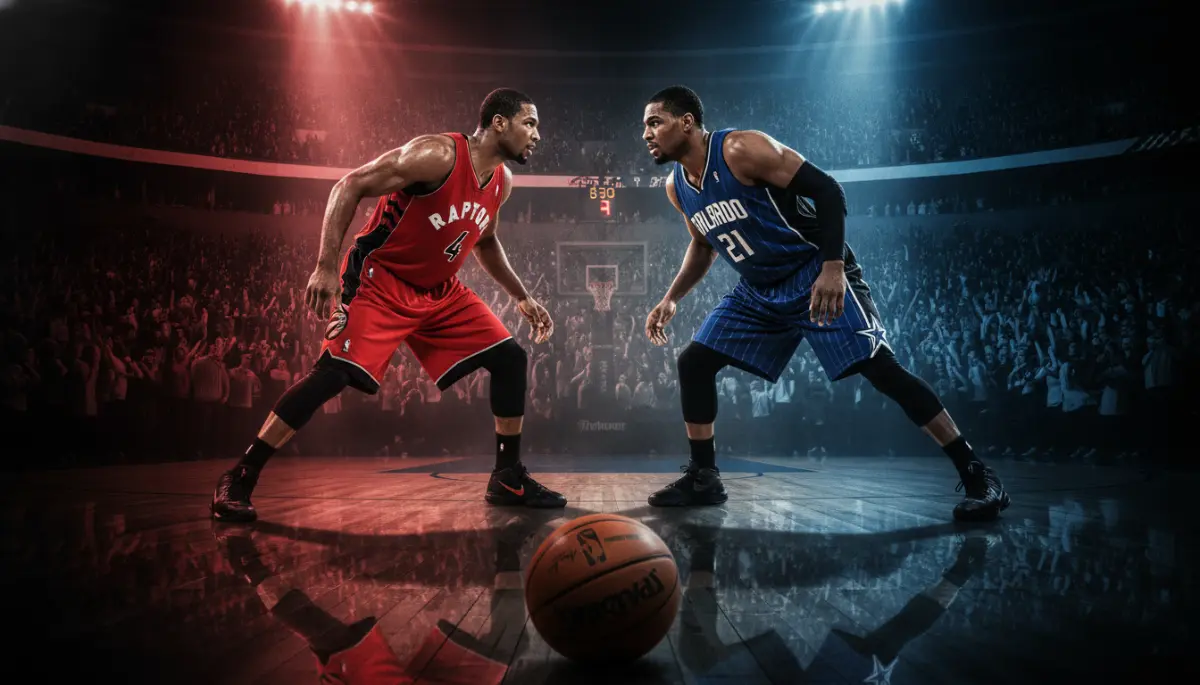
Toronto returns to Scotiabank Arena on Wednesday, October 28, seeking a response after its first defeat of the 2026–27 NBA season. The Raptors began the campaign 2–0 but then fell 117–94 to the Minnesota Timberwolves, exposing problems with half-court execution and scoring consistency.
Orlando enters the matchup with a 1–2 record and a boost of confidence after winning 111–102 on the road against the New York Knicks. Both teams are missing major contributors, so the game could come down to which supporting cast handles expanded responsibilities more effectively.
Game Information and Short-Series Context
The Magic and Raptors are scheduled to tip off at 7:30 p.m. ET at Scotiabank Arena in Toronto. Canadian viewers can watch the game on TSN. The teams will meet again in the same building on Friday, October 30, creating a quick opportunity for both coaching staffs to adjust.
- Matchup: Orlando Magic at Toronto Raptors
- Date: Wednesday, October 28, 2026
- Start time: 7:30 p.m. ET
- Location: Scotiabank Arena, Toronto
- Toronto record: 2–1
- Orlando record: 1–2
- Canadian television: TSN
Toronto Needs a Better Offensive Response
The Raptors looked sharp in their first two games, beating the Chicago Bulls 135–92 and the Washington Wizards 112–102. Their performance against Minnesota was a sharp contrast, as the Timberwolves disrupted Toronto’s rhythm and held the home team to fewer than 100 points.
The biggest concern was Toronto’s difficulty creating efficient offense when its initial actions were stopped. The Raptors will need quicker ball movement, stronger cuts, and more aggressive attacks at the rim to prevent Orlando from settling into its defensive shape.
Scottie Barnes is central to that improvement. He scored 28 points and collected 14 rebounds against Washington, but he went scoreless in 28 minutes against Minnesota. A more assertive Barnes could change the game by pushing the ball, drawing defensive attention, and creating open looks for teammates.
Players Who Can Shift the Matchup
- Scottie Barnes: Toronto needs his rebounding, playmaking, and interior scoring to return to the forefront.
- RJ Barrett: With Kawhi Leonard unavailable, Barrett may receive a larger share of the team’s shot attempts.
- Immanuel Quickley: His decision-making and ability to control tempo will be important against Orlando’s athletic backcourt.
- Ja’Kobe Walter: The young wing gave Toronto a spark with 22 points against Minnesota and could again provide perimeter scoring.
Toronto does not need one player to replace every part of Leonard’s contribution. It does need several players to make reliable decisions and prevent the offense from becoming predictable.
Orlando’s Confidence Comes From Its Depth
The Magic opened the season with losses to Atlanta and Minnesota, but their win over New York offered evidence that they can compete without their leading star. Orlando defeated the Knicks despite Paolo Banchero’s absence, using balanced production and a strong all-around performance from Franz Wagner.
Wagner finished that game with 23 points, 13 rebounds, and nine assists. Desmond Bane added 22 points, while Tristan da Silva and Anthony Black also supplied useful contributions. That distribution makes Orlando difficult to prepare for because Toronto cannot focus on only one scoring source.
Wagner and Bane Create Different Problems
Wagner is capable of attacking closeouts, creating his own shot, and finding teammates when help defenders collapse. Toronto must keep him from gaining momentum in transition and should force him to make difficult decisions in crowded half-court situations.
Bane presents a different challenge. His outside shooting can punish late rotations, particularly when Wagner draws two defenders. Toronto’s perimeter defenders must communicate clearly and avoid giving Bane uncontested opportunities from beyond the arc.
Injuries Put More Pressure on the Supporting Cast
Toronto will be without Kawhi Leonard because of swelling in his left knee. The injury is expected to keep him out for multiple weeks, removing a significant two-way presence from the Raptors’ lineup. Nate Bittle is also listed as unavailable with a foot injury.
Orlando’s injury list is even longer. Banchero is out with a right high-ankle sprain, while Jalen Suggs is sidelined by a right knee injury. Jonathan Isaac is unavailable because of a knee issue, and Noah Penda and Izaiyah Nelson are also out with hamstring and ankle injuries, respectively.
Those absences affect both the game plan and the rotation. Toronto must replace Leonard’s scoring, defensive versatility, and late-clock shot creation. Orlando, meanwhile, needs enough offense from Wagner, Bane, Anthony Black, and its reserve units to avoid long scoring droughts.
Three Matchups That May Decide the Result
Barnes Against Orlando’s Help Defense
Barnes cannot afford another passive offensive night. Orlando will likely test whether he can consistently beat single coverage while also sending help when he drives. If Barnes attacks early and makes quick reads, Toronto can create open shots across the floor.
Toronto’s Closeouts Against Bane
The Raptors must defend the three-point line without giving up easy driving lanes. Overcommitting to Bane could open passing angles for Wagner and Black, but failing to close out could allow Orlando to build a lead through efficient perimeter shooting.
Rebounding at Both Ends
Second-chance possessions may become especially valuable if the teams struggle to shoot efficiently. Toronto needs to secure its defensive rebounds and use its athletic forwards to generate extra opportunities on offense. Orlando’s size and length make careless box-outs potentially costly.
Betting Angles Worth Monitoring
Toronto owns the home-court advantage and has the better early record, but Orlando’s victory in New York showed that the Magic remain dangerous despite their injuries. The spread could move significantly once the final lineups and player statuses are confirmed.
The total-points market also deserves caution. Missing stars can reduce offensive efficiency and slow the pace, yet weak defensive rotations or hot three-point shooting could produce a higher-scoring game than expected. Reviewing the confirmed absences is more useful than relying only on season averages.
Barnes’ player props may attract attention after his scoreless showing against Minnesota. Toronto is likely to involve him more heavily, making his points, rebounds, and assists markets relevant. Barrett’s scoring total and Quickley’s assist number could also become more appealing if Leonard’s absence increases their usage.
Any wager should be compared with the latest injury report and starting lineup information rather than judged solely by the teams’ records.
Prediction: Toronto Has a Narrow Home-Court Edge
Toronto has the more favorable setting and enough scoring options to recover from its loss in Minnesota. A sharper performance from Barnes, combined with improved ball movement, would give the Raptors a clear path to controlling the game.
Orlando has already demonstrated that it can overcome major absences. Wagner’s versatility and Bane’s shooting could keep the visitors close, especially if Toronto allows open threes or loses the rebounding battle.
Prediction: Toronto Raptors to win a competitive game. The home team has a slight advantage, but the margin should remain modest. Toronto’s outcome will depend on whether its replacement rotation can produce efficient offense while limiting Orlando’s transition chances.
Why Friday’s Rematch Matters
Wednesday’s game begins a two-game meeting at Scotiabank Arena. The rematch on Friday, October 30, is part of NBA Cup group play and will give both teams a chance to respond immediately to what they learn in the opening contest.
For Toronto, the immediate goal is to restore offensive confidence and avoid another stagnant performance. A victory would move the Raptors to 3–1, strengthen their early-season momentum, and provide a useful foundation before a demanding November schedule.