
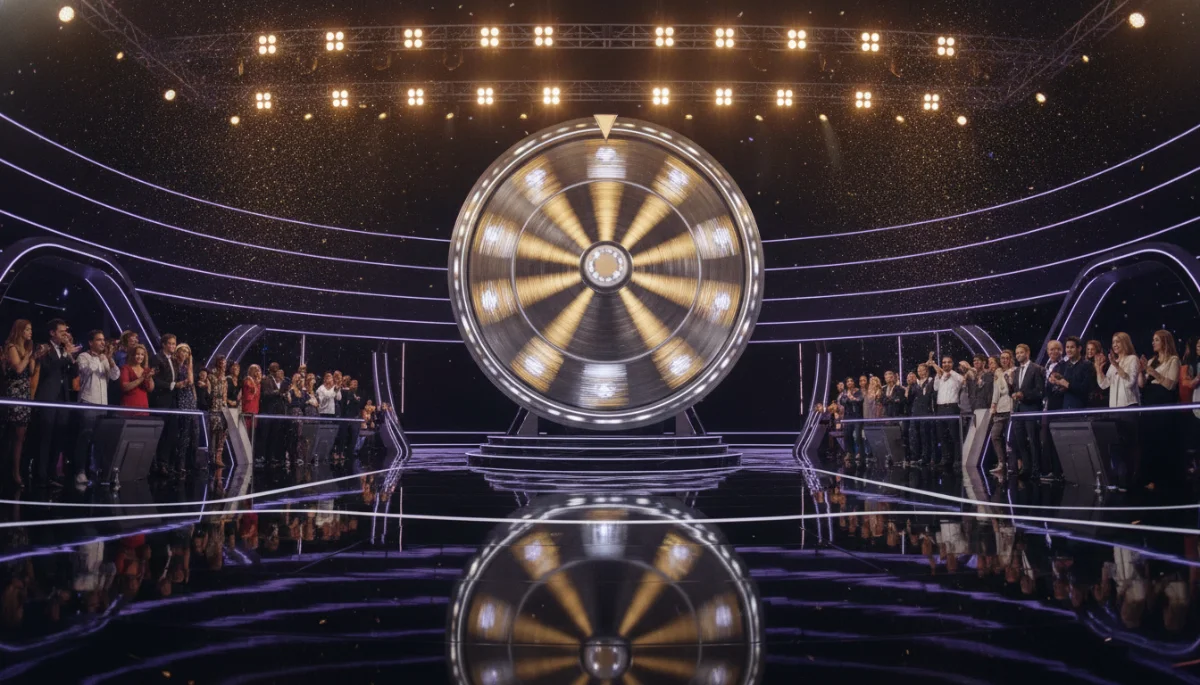
Live dealer wheel games blend the certainty of a real studio with the suspense of a shared wager, which is why they have become such a strong fixture in modern online casinos. A single spin can draw in thousands of players at once, yet the action still feels intimate because everything happens in real time.
At their core, these games are simple: a host spins a physical wheel, the result is shown on screen, and every player who placed a bet waits for the same outcome. The entertainment comes from the presentation layers around that basic idea, especially the multipliers, bonus events, and television-style pacing that make each round feel like a miniature show.
What Makes a Live Wheel Game Different
These titles sit in the live casino game-show family rather than the traditional table-game category. They use real presenters, studio lighting, multiple camera angles, and a synchronized betting window, but they replace cards and dice with a wheel that determines the result.
The format stands apart for a few clear reasons:
- One shared result: everyone betting in that round is tied to the same spin.
- Visible mechanics: the wheel, the flapper, and the bonus segments are all on display.
- Large-scale participation: the same round can attract a massive crowd without slowing the pace.
- Entertainment-first design: sound effects, host energy, and bonus sequences are built to keep attention high.
That mix of transparency and spectacle explains why wheel games have expanded from an experimental format into a major part of many live casino lobbies.
How a Round Usually Unfolds
Most live wheel titles follow a rhythm that becomes easy to read after only a few sessions. The details vary by provider, but the basic sequence stays familiar.
- The betting window opens. Players place wagers on the numbers, symbols, or bonus outcomes available for that game.
- Multiplier selection happens. In many titles, a separate feature assigns a random multiplier to one segment before the spin begins.
- The host starts the wheel. A presenter physically spins the wheel in the studio while the cameras track the motion.
- The wheel settles. The flapper lands on a segment, and the game pays standard results or triggers a bonus round.
The most misunderstood part is usually the multiplier step. It does not improve the odds of landing on a segment. It only changes the value of a specific result if that exact result appears on the spin, so two separate events have to align for the bigger payout to happen.
The Best-Known Titles and How They Differ
Several suppliers dominate the live wheel space, and each one has pushed the format in a different direction. Some keep things very close to a classic money wheel, while others build entire bonus worlds around the wheel result.
Dream Catcher and the classic wheel model
Dream Catcher is the clearest starting point for the category. It uses a straightforward 54-segment wheel built around number outcomes, with rare multiplier pockets that can send the round into a second spin. The appeal lies in its simplicity, since the game asks little from the player beyond selecting a number and waiting for the result.
Its structure is also what made it influential. Once players responded well to a live wheel with open odds and simple betting choices, other studios began adding more elaborate layers on top of the same foundation.
MONOPOLY Live and branded spectacle
MONOPOLY Live took the wheel format and wrapped it in one of the best-known board-game brands in the world. When the wheel lands on a bonus trigger, the stream shifts into an augmented reality board where Mr Monopoly moves through a digital environment, collecting prizes and multipliers along the way.
The branding matters here because it lowers the learning curve. Players already understand the visual language, so the game feels familiar before the first spin even starts.
Crazy Time and the bonus-driven model
Crazy Time moved the category into a louder, more volatile direction. Instead of relying mainly on number bets, it splits the wheel between small-number outcomes and four distinct bonus games: Coin Flip, Cash Hunt, Pachinko, and Crazy Time itself.
That design gives the game a stronger emotional rhythm. Smaller wins appear often enough to keep the session moving, while the bonus pockets create the possibility of a very large return. The downside is equally clear: the bets tied to the biggest upside generally carry the weakest theoretical return.
For many players, that trade-off is the whole attraction. The game is less about steady pace and more about dramatic swings, rapid commentary, and the hope of catching one of the rare high-value events.
Funky Time and wider wheel variety
Funky Time expands the wheel and adds letter-based betting alongside number selections. It also introduces disco-themed bonus events, giving the entire experience a more playful, music-driven style.
The larger wheel and extra bonus paths give the game more texture, but they also increase complexity. New players benefit from taking a moment to understand how the letter bets and special segments interact before putting larger amounts at risk.
Other notable alternatives
Pragmatic Play and Playtech have both added their own versions of the formula. Mega Wheel keeps the design relatively clean while layering random multipliers onto number outcomes. Sweet Bonanza CandyLand borrows the feel of a slot franchise and turns it into a live bonus game with a smaller set of betting positions. Adventures Beyond Wonderland leans heavily into a fantasy theme and uses a dice-based bonus system to add another layer of unpredictability.
What these titles share is more important than what separates them. Each one treats the wheel as the centrepiece and then adds an extra stage, bonus board, or multiplier mechanic to stretch the excitement beyond the basic spin.
Why RTP and Volatility Matter So Much
Return to player, or RTP, is one of the most quoted numbers in this category, but it is often misunderstood. It describes a long-term theoretical average, not what any one session will produce. A game listed at 96% RTP is designed to keep roughly 4% over the long run, but that does not mean a player should expect anything close to a 96% return in a single sitting.
Volatility is usually the more useful concept for live wheel games. These titles are built to create long stretches of modest results, interrupted by the occasional bonus hit or high-multiplier landing. That pattern is intentional, and it is exactly what gives the format its tension.
A few practical points are worth keeping in mind:
- Different bets can have different RTP values, even inside the same game.
- The biggest advertised win is rarely the most likely outcome, especially in bonus-heavy titles.
- Previous results do not influence the next spin, because the wheel has no memory.
- Session length changes perception, since a run of small results can feel very different over five minutes than over an hour.
Because of that, the most sensible approach is to read the paytable first and treat the RTP as background information rather than a promise.
How to Enjoy the Format Without Losing Control
The strongest live wheel games are designed to keep players engaged through momentum, suspense, and the social feeling of sharing a result with a crowd. That makes them entertaining, but it also means they can encourage longer play than intended if limits are not set in advance.
Useful habits include the following:
- Set a budget before the first spin and keep it separate from everyday spending.
- Use time limits as seriously as deposit limits, especially if the game feels fast.
- Do not chase a bonus round just because one has not landed for a while.
- Step away after a strong win or a rough streak so emotion does not take over the session.
- Check that the casino offers responsible gambling tools such as reality checks, self-exclusion, and deposit caps.
If play stops feeling recreational, support is available through services such as BeGambleAware and GamCare, both of which provide free and confidential help.
The Bottom Line on Live Wheel Entertainment
Live dealer wheel games succeed because they combine a real physical object, a live presenter, and a shared outcome with the drama of modern game-show production. That combination gives them a different personality from slots and traditional tables, and it explains why they have become such a visible part of the casino floor.
The smartest way to approach them is also the simplest: understand the wheel layout, know which bets carry the best return, remember that multipliers do not change probability, and treat the whole experience as entertainment rather than a path to predictable profit.