
The official fantasy game tied to FIFA World Cup 2026™ is now live, and Aramco is powering the experience. Fans can build a 15-player roster, follow the tournament across every stage, and compete for global, confederation, and country-level bragging rights.
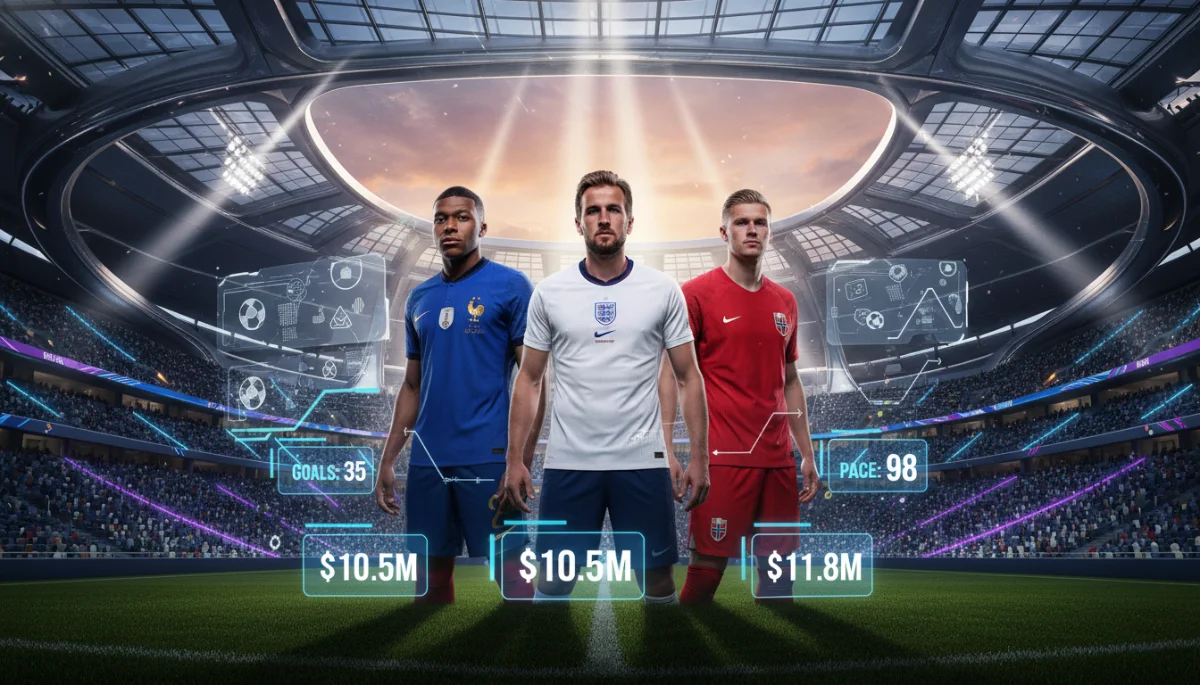
Early attention is already moving toward the biggest names in the sport, with Kylian Mbappe, Harry Kane, and Erling Haaland standing out as premium targets for managers who want instant firepower.

How the Game Is Set Up
The fantasy format is built around long-term planning rather than frequent market swings. Each manager must assemble a squad of 15 players, made up of 2 goalkeepers, 5 defenders, 5 midfielders, and 3 forwards, while staying within an opening budget of $100 million. That budget rises by another $5 million once the knockout rounds begin, which gives managers a little more flexibility when the tournament becomes more intense.
Player prices stay fixed throughout the competition, so the challenge is less about reacting to value changes and more about making smart picks from the start. There are also country-based restrictions, with the group stage limiting each squad to a maximum of three players from the same nation. Before kickoff on Thursday, 11 June, managers may make unlimited changes, and the same freedom returns ahead of the Round of 32. After that, normal transfer limits apply for the remaining stages.
- Build a balanced 15-player squad within the $100 million cap.
- Respect the nation limit during the group stage.
- Use unlimited transfers before the opening match and again before the Round of 32.
- Adjust captains and bench selections during live Matchdays to squeeze out extra points.
- Save and time the available chips carefully across the full tournament.
Five chips are available across the contest: Wildcard, 12th Man, Maximum Captain, Qualification Booster, and a Mystery Booster that will be revealed before the Round of 32. The structure encourages managers to think beyond a single match and plan for both group-stage form and later-stage upside.
What Drives Fantasy Points
Scoring is based on real match output, with points awarded for minutes played, goals, assists, cards, own goals, penalties won or conceded, and defensive or attacking actions such as tackles, chances created, and shots on target. Goals conceded also matter, which makes defensive consistency important for both defenders and goalkeepers.
There are extra rewards for direct free-kick goals, and one particularly useful twist is the scouting bonus. If a player selected by fewer than 5% of managers scores more than four points in a match, that player earns additional value for those who took the risk early. For anyone trying to separate from the field, that rule can be just as important as picking the obvious stars.
Prices, Regions, and High-Value Targets
The top end of the market is expensive for a reason. Haaland, Kane, and Mbappe sit at $10.5 million each, while Lionel Messi and Cristiano Ronaldo follow at $10 million. In defense, Portugal’s Nuno Mendes leads at $5.8 million. In goal, the premium options include Brazil’s Ederson and Alisson Becker, along with Spain’s David Raya and Unai Simon.
The pricing also reflects the FIFA/Coca-Cola Men’s World Ranking, with the top six nations accounting for most of the most expensive players. Out of the 25 highest-priced names, 20 come from those six countries, and England and France each place five players among the elite tier. That concentration makes it easy to see where the game’s strongest depth sits, but it also raises the pressure on managers to find cheaper value elsewhere.
Outside Europe, the Confederation Challenge Leaderboard adds another layer of strategy by rewarding selections from different regions. Mohamed Salah and Omar Marmoush headline Africa, while Son Heungmin and Salem Al Dawsari lead Asia. Among the host nations, Jonathan David, Raul Jimenez, and Christian Pulisic are all priced at $7 million, and New Zealand’s Chris Wood appears as Oceania’s top forward option at $6.5 million.
Historical note: Mbappe won the adidas Golden Boot at FIFA World Cup Qatar 2022™. The award began as the Golden Shoe in 1982 and was renamed in 2010 to honor the tournament’s top scorer.