
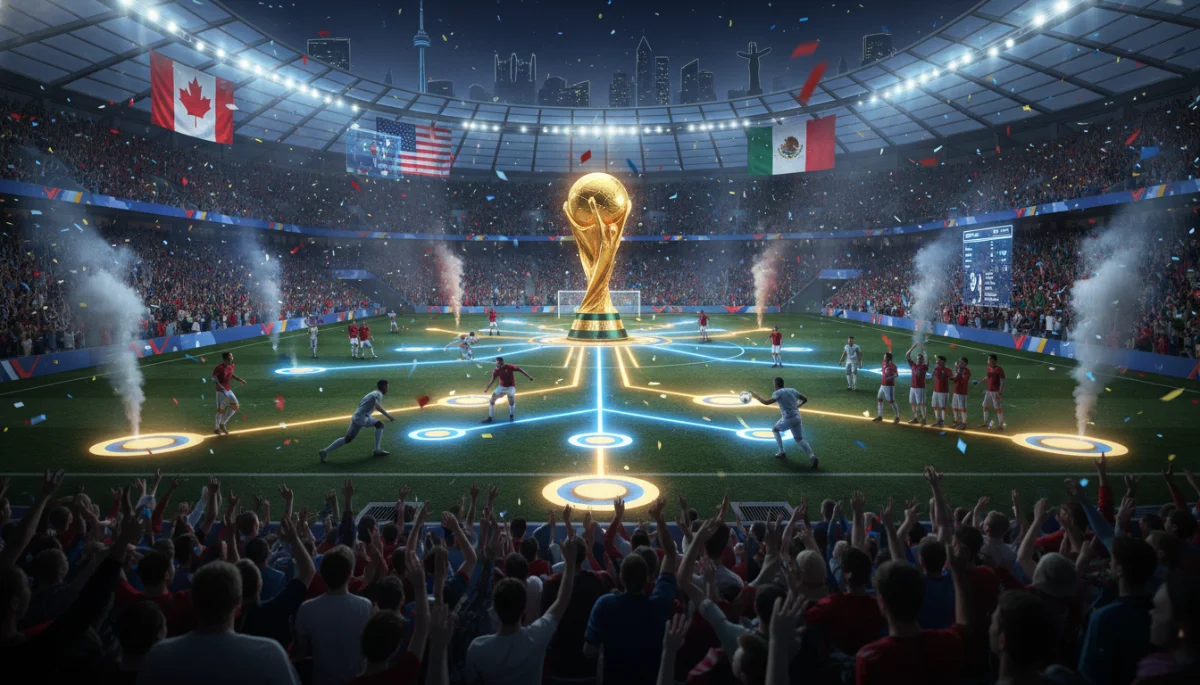
The 2026 FIFA World Cup will feel different from the first whistle. With 48 teams, 12 groups, and three host nations spread across North America, the tournament is built to create more uncertainty, more travel, and more chances for surprises. That matters because the bracket is not just a graphic on a screen. It is the roadmap that decides who can survive the group stage, who gets a second life as a third-place finisher, and which contenders face the hardest climb to the final at MetLife Stadium on July 19.
The expanded field also means that every result carries extra weight. A single goal can change which third-place teams advance, alter the knockout pairings, and reshape one side of the bracket entirely. For fans, that makes the tournament easier to follow in one sense and much more complicated in another. The key is understanding how the new structure works from the opening match through the championship game.
The new format, in plain English
The old World Cup setup used eight groups of four teams. In 2026, the tournament expands to 12 groups of four. Every team still plays three group matches, but now the path forward is wider. The top two teams in each group advance automatically, and they are joined by the eight best third-place teams across the 12 groups. That creates a 32-team knockout round, which is a brand-new stage for the men’s World Cup.
This change does more than add matches. It also softens the blow of an early loss, because a team can still move on without finishing in the top two. At the same time, it makes tiebreakers more important than ever. A side that wins one match, draws another, and loses one may still find itself in a strong position if its goal difference is healthy. In a tournament this large, margin matters.
From group play to knockout football
The group stage runs from June 11 through June 27, with 72 matches spread across the three host countries. Teams are ranked by points first, then goal difference, goals scored, head-to-head results, fair play points, and finally FIFA ranking if they are still tied. That order can decide whether a nation enters the next round with momentum or heads home earlier than expected.
Once the group phase is complete, the eight third-place qualifiers are inserted into the bracket through a fixed FIFA matrix. That means the knockout field is not arranged at random. It is preplanned based on which groups produce the third-place qualifiers, and that can send very different teams into very different paths. A strong group winner might be rewarded with a manageable opponent, while another group winner could be matched with a dangerous third-place side that looks like a weak draw on paper but plays like a heavyweight in practice.
What the knockout route looks like
From the Round of 32 onward, the tournament becomes pure elimination soccer. There are no second chances, no replays, and no away-goals rule. If a match is tied after 90 minutes, the teams play 30 minutes of extra time. If neither side scores enough to settle it, penalties decide the winner. To reach the trophy, a team must win five straight knockout matches, which is one more than in the 32-team era.
- Round of 32: June 28 to July 3
- Round of 16: July 4 to July 7
- Quarterfinals: July 9 to July 11
- Semifinals: July 14 and July 15
- Third-place match: July 18
- Final: July 19 at MetLife Stadium in East Rutherford, New Jersey
That schedule leaves little time for recovery. Travel, weather, and squad depth will all matter, especially because the tournament stretches across a huge geographic footprint. Teams with deep benches may gain an edge late in the event, while squads that rely too heavily on a small core could run out of energy by the semifinal stage.
Why the bracket matters for the contenders
Canada’s placement in Group B gives the host nation a clear storyline to follow. They face Bosnia and Herzegovina, Qatar, and Switzerland, with matches scheduled in Toronto and Vancouver. A top-two finish would send them directly into the Round of 32, but even third place could be enough if the points total and goal difference are strong. That makes every group match meaningful, because the difference between first, second, and third could determine whether Canada’s route stays manageable or turns into a collision with a much stronger opponent.
Other groups also shape the overall bracket drama. Brazil headlines Group C, which also includes Morocco, Haiti, and Scotland, creating one of the most watchable early pools. Group D features the United States, Paraguay, Australia, and Türkiye, a setup that should keep local interest high and produce a tense battle for advancement. Elsewhere, the spread of Argentina, Spain, France, and England across separate groups creates the possibility of giant quarterfinal clashes if the expected teams keep winning.
The small details that decide big outcomes
Because eight third-place teams advance, the tiebreaker system can change the entire bracket picture. One late goal can lift a team into a better seeding lane or push it into a far tougher side of the draw. In a tournament with this many moving parts, even fair play points can become meaningful. That means yellow cards and red cards are not only discipline issues; they can become tournament-shaping variables.
For fans following every twist, the lesson is simple: do not focus only on the favorites. Watch the group tables, monitor the third-place standings, and pay attention to how FIFA slots each qualifier into the knockout grid. The 2026 tournament is built to reward teams that stay sharp from the first match to the last, and the bracket will reveal just how demanding that path really is.
For live updates and the official tournament hub, visit FIFA.com/worldcup.