
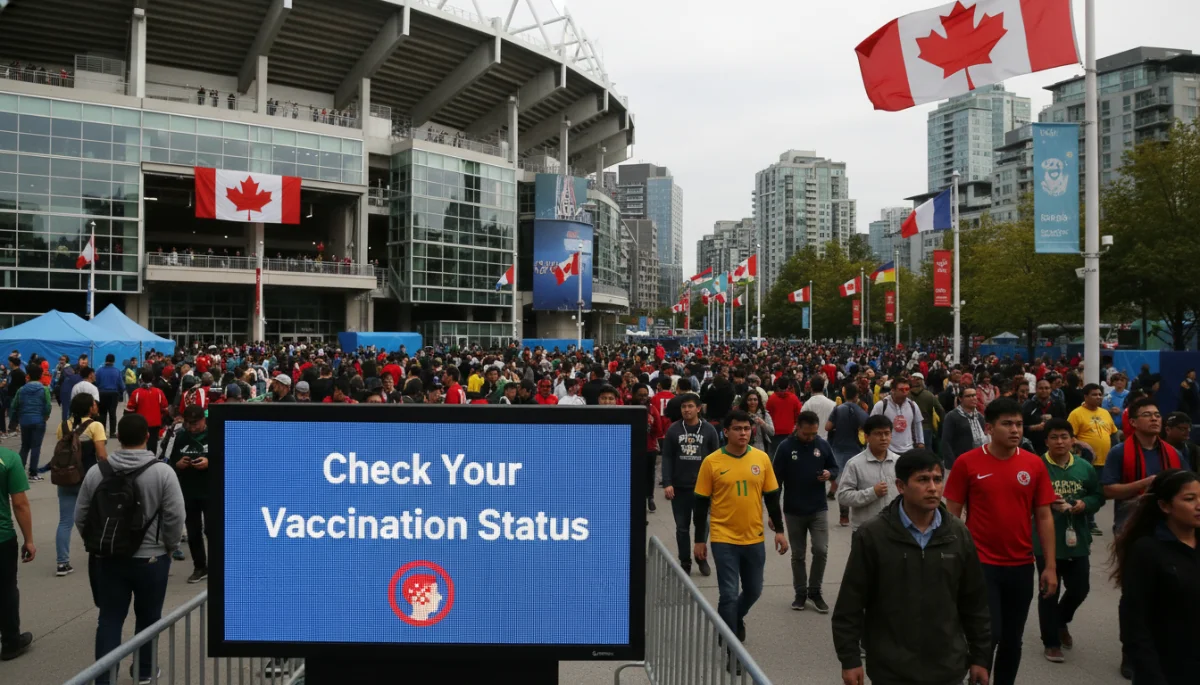
Health officials are urging caution as Vancouver prepares to welcome a wave of international visitors for the FIFA World Cup. The concern is not the event itself, but what can travel with the crowds: measles, a highly contagious virus that still circulates in many countries and can spread quickly in busy, enclosed spaces.
Canada’s Public Health Agency has already flagged measles as one of the most likely illnesses to be imported during the tournament. That warning reflects a simple reality: large sporting events bring together people from many regions, and even one infectious case can become a problem when thousands of fans are moving through airports, transit systems, hotels, and stadiums.
Why Officials Are Paying Attention
Public health experts say the risk rises when several factors overlap at once. International travel increases exposure, packed venues make transmission easier, and lower vaccination rates leave some communities with less protection than they need. Ontario has already released an infectious disease risk review for the World Cup that points to those exact pressures.
British Columbia has not yet published a public version of its own assessment, and some physicians say that gap leaves residents without the clearest possible picture ahead of the tournament.
What Doctors Want B.C. to Say More Clearly
Dr. Brian Conway, medical director of the Vancouver Infectious Diseases Centre, believes the province should be more direct with the public before fans arrive. In his view, people should be reminded to check their measles immunity now rather than after cases begin appearing.
He says the message should reach both residents and visitors: Canada is already dealing with active measles transmission, and anyone who is not fully protected should speak with a health care provider about vaccination. For Conway, the main issue is timing. Once the city is full of international travelers, it becomes harder to prevent a preventable infection from gaining a foothold.
The Numbers Show a Wider National Problem
Canada has reported more than 900 measles cases across seven jurisdictions this year, with Alberta and Manitoba carrying the largest share. The current outbreak follows a much larger surge last year, when more than 5,000 infections were recorded nationwide.
That earlier wave is believed to have begun after a case linked to exposure outside the country was identified in New Brunswick in the fall of 2024. The pattern matters because it shows how quickly imported infections can spread once they enter underprotected populations.
In British Columbia, the picture is also concerning. Provincial data shows 470 measles cases across 2025 and 2026, and about 80 percent of them have been concentrated in northeastern B.C., where immunization rates are among the lowest in the province.
A Reminder From Vancouver’s Past
Health experts are not treating this as a brand-new challenge. Vancouver has seen what can happen after a major international event before. Following the 2010 Winter Olympics, British Columbia recorded a measles outbreak that included 82 confirmed cases.
That episode was different in scale and setting, but it remains a useful warning. Major gatherings can create ideal conditions for disease spread, especially when people arrive from many countries with different immunization patterns. Dr. Conway says the risk is sharper now because some of the places sending athletes, staff, and fans may have even lower vaccination coverage than Canada.
Local Health Agencies Say Planning Is Underway
Vancouver Coastal Health says it has been preparing for the FIFA World Cup for years. The health authority confirmed that it worked with the B.C. Centre for Disease Control on a public health risk assessment, although the details have not been shared publicly.
Dr. Mark Lysyshyn, deputy chief medical health officer with Vancouver Coastal Health, said the assessment placed the measles risk in the medium range. He also noted that the region has already managed dozens of imported measles cases during the current outbreak without seeing sustained spread in the area.
According to Lysyshyn, strong local immunization coverage has helped keep those imported cases from turning into bigger chains of transmission. That, he said, is one reason officials do not expect a World Cup case to be dramatically harder to handle than other recent imported cases.
How the Risk Is Likely to Play Out
The overall danger to the general public is still considered limited, especially for adults who are already immune through vaccination or past infection. But experts say the real concern is what happens if measles reaches a community where many people are underimmunized.
Dr. Monika Naus, a professor in the University of British Columbia’s School of Population and Public Health, says large international events always carry some infectious disease risk. Even so, she believes the broader public remains relatively protected because most people in Canada have some level of immunity.
Where the threat becomes more serious is in clustered communities with lower vaccination coverage. In those places, a single imported case can spread more easily and more quickly than it would in a well-immunized population.
Why Vaccination Checks Matter Before the First Match
- Review your measles vaccination history and make sure it is up to date.
- Ask a doctor or clinic if you are unsure whether you have received the full protection you need.
- Encourage family members, especially children and frequent travelers, to do the same.
- If you are visiting Vancouver for the tournament, learn whether your home country has had recent measles activity.
That kind of preparation is more than a personal precaution. It is one of the best ways to reduce the chance that an imported case becomes a public health problem during a major international event.
Canada’s Elimination Status Is Already Gone
Last year, the Public Health Agency of Canada said the Pan American Health Organization informed Canada that it no longer holds measles elimination status. That designation is lost when transmission continues long enough to show the virus is circulating beyond isolated imported cases.
Canada can regain the status, but only if transmission is interrupted for a full year. Until then, public health leaders say the focus has to remain on prevention, rapid detection, and strong vaccination coverage.
The Bottom Line for Vancouver
The World Cup is expected to be a major celebration for the city, but it also brings a public health test. Officials are not warning people to stay away; they are urging them to be ready. In practical terms, that means checking immunity, staying informed, and taking measles seriously before crowds arrive.
For Vancouver, the challenge is straightforward: enjoy the global spotlight without allowing a vaccine-preventable disease to move through the city at the same time.